Fi tests Shade all-natural sunscreen with some interesting results
You’re fed up with ultra-processed, chemical-heavy sunscreens and looking for more natural skin protection. Could this be Shade all-natural sunscreen? Fi tests it for you.
Summary
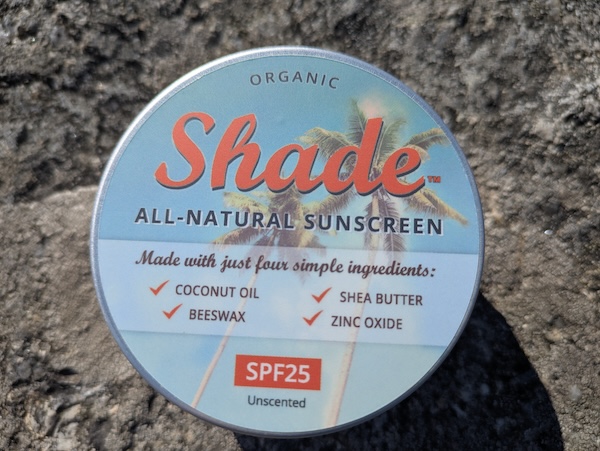
Shade is an SPF25 sunscreen made from all-natural ingredients. With a far simpler profile than chemical based sunscreens, it contains just four moisturising and sun-resistant ingredients, and is 72% organic and sustainably sourced.
It’s worth mentioning here that I’m not an expert in skincare and I was sent (at my request) this product to try free of charge. I’m under no obligation to provide a review but I am really interested in natural, big-corp-busting products that can help with life outdoors.
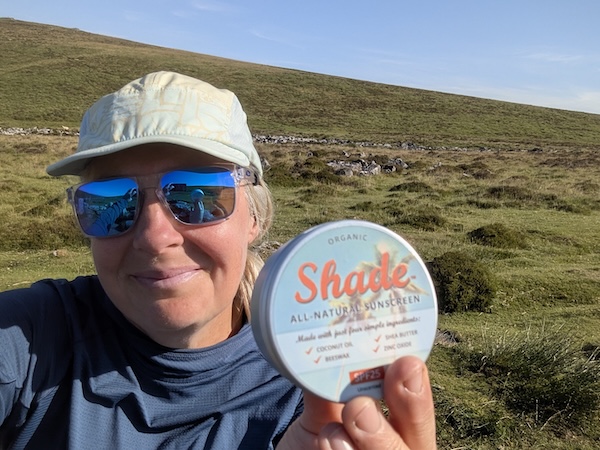
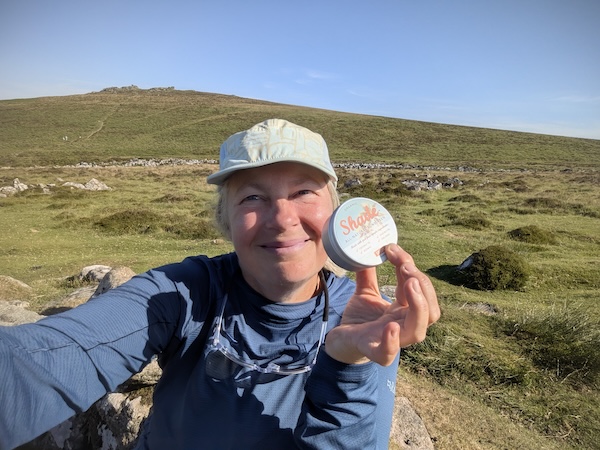
I tested Shade sunscreen on the beach and out on Dartmoor. On all the testing days I was in the sun for much of the day and reapplied regularly.
First impressions
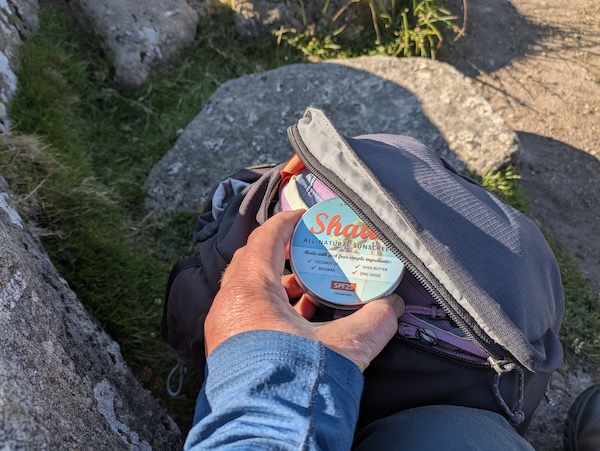
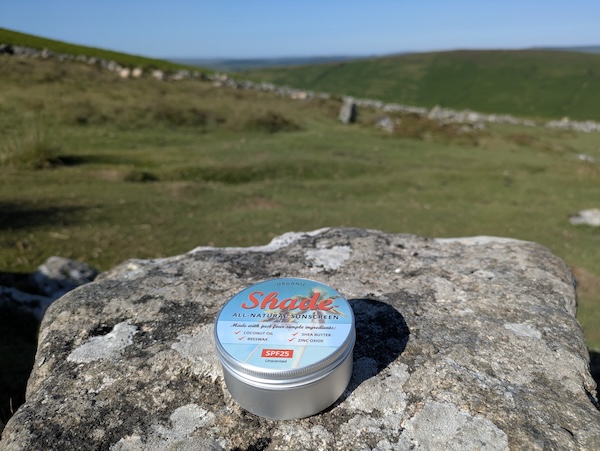
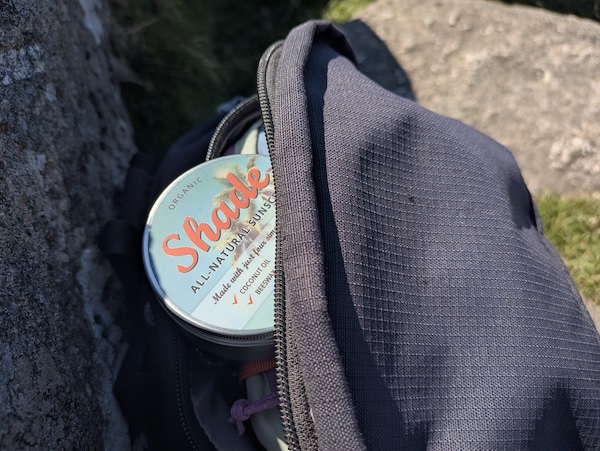
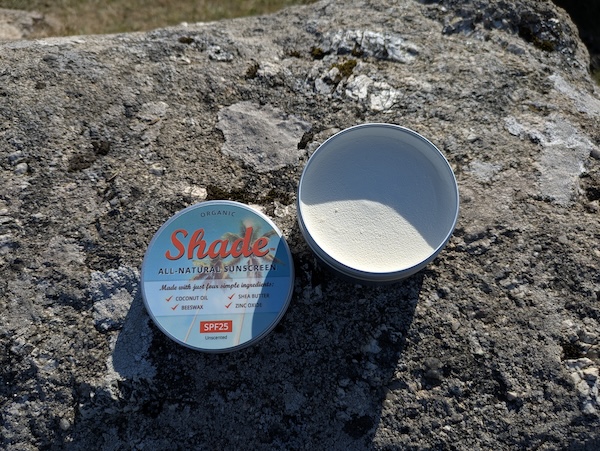
It might sound strange but I loved the format of this sunscreen. Instead of a tube, Shade comes in a sensible recyclable cabin-sized 100ml tin, small enough to slip into the top pocket of my daysack but sturdy enough not to leak. I also loved the smaller 15ml tin, which fits neatly into any pocket.
Shade is a fragrance-free product, its aroma is unusual but not unpleasant and definitely more natural smelling than chemical-based sunscreens. I instantly warmed to it, which was just as well because I was testing it during a June heatwave.
Star rating
4/5 ****

PROS
Sustainably sourced
Just four natural ingredients
Two handy sizes
Protects against UVA and UVB
Great for sensitive skin
No added perfume
Tested to EU standards
CONS
Only SPF25 available
Not for snow or high altitudes
Unusual but not unpleasant aroma
How effective is Shade?
Shade sunscreen offers SPF25, which blocks around 96% of UVB rays. It’s important to look at it (and any sunscreen) as a filter rather than a complete blocker. I used it on my face in the middle of the day during a heatwave and didn’t burn but I was also careful (as we always should be) to reapply and wear a sunhat.
I was interested to read that our UVA sun protection rating system is trademarked and can only be used by certain Boots stocked brands (big beauty monopolies again). This means that Shade doesn’t have an official UVA rating but it has been tested and has a corresponding four out of five stars.
I tested Shade sunscreen on a day on the beach and two days on Dartmoor. There was no cloud cover and I had prolonged exposure. I reapplied Shade regularly throughout the days and, despite my fairly fair skin, didn’t burn on any of them. On Dartmoor I also covered my legs and arms (I can recommend RAB’s Sonic Hoody) and wore a sunhat.
Which ingredients does Shade use?
I was particularly impressed with this. Shade uses just four natural ingredients (I counted over 50 on my usual sunscreen and only recognised three of them).
Organic unrefined virgin coconut oil – a natural oil that’s great for sensitive skin and super moisturising. Many sunscreens use synthetic emollients instead of natural coconut oil and those that do use it tend to use the refined version. Refining has a negative impact on vitamins and anti-microbials.
Organic unrefined shea butter – a natural nut extract with anti-inflammatory properties. The refined form of shea butter is found in small amounts in many sunscreens but the refining process is energy heavy and causes loss of nutrients.
Sustainable unrefined beeswax – a high quality natural protector with anti-bacterial properties. This is the ingredient that gives Shade its smooth feel.
Non-nano zinc oxide – refined from pure zinc (unlike some zinc oxides), this key ingredient has a safe (non-nano) particle size that starts reflecting the sun’s rays as soon as you apply it.
Is Shade better for the environment than chemical sunscreens?
I think so, and I’m not the only one. Shade All-Natural Sunscreen has been recognised by Ethical Consumer Magazine and meets my eco-friendly criteria on many levels. It uses natural ingredients with very little refining (zinc oxide only) and from non-plastic packaging to animal welfare (no animal testing) puts nature and the planet first.
You might be interested to know (I was) that many sunscreens contain non-marine-safe ingredients and even microplastics that can harm coral and marine life. Whilst Shade does not yet have a formal reef-safe certification, it’s natural ingredients and non-nano zinc oxide must surely make it a more preferable option for anyone who loves wild swimming, the sea and our water wildlife.
Technical Details
Sustainable beeswax
Organic unrefined shea butter
Organic unrefined coconut oil
Non-nano zinc oxide
SPF25
100ml tin (flight cabin friendly)
15 ml tin (handy pocket size)
Good value for money?
A 100ml cabin-friendly tin of Shade sunscreen will cost you £19.95. My current sunscreens cost £15.99 (P20) and £4 (Ambre Solaire).
It’s worth noting that Shade comes in a 100ml tin. This is important for holiday costs because although cabin baggage restrictions are 100ml for liquids, buying a sunscreen in that size is actually quite tricky (obviously two 50ml tubes are going to be more costly in money and plastic than one 100ml tube).
Although Shade sunscreen is more expensive than many chemical sunscreens, I didn’t feel it was fair to compare it to these; instead I looked at alternative natural sunscreen options (at SPF30 because this was more common). Overall, the competitors appeared to charge more money for a more complicated ingredients profile.
Husk and Seed – Natural Mineral Sunscreen SPF30 (Neroli)
- £26.00 for 30ml
- 7 ingredients
- Non-nano zinc oxide
Odylique – Natural Sunscreen SPF30
- £27 for 100ml
- 12 ingredients
- Non-nano zinc oxide
Related News

Heavy for backpacking but this tent offers plenty of space. Are you looking for a two-person tent …

Isobaa asked me to review some of their merino gear in exchange for the items reviewed. I was …

Changing dry robes can be stylish and practical after all. Disclaimer: The Beaumont dry robe and Cirrus …
