
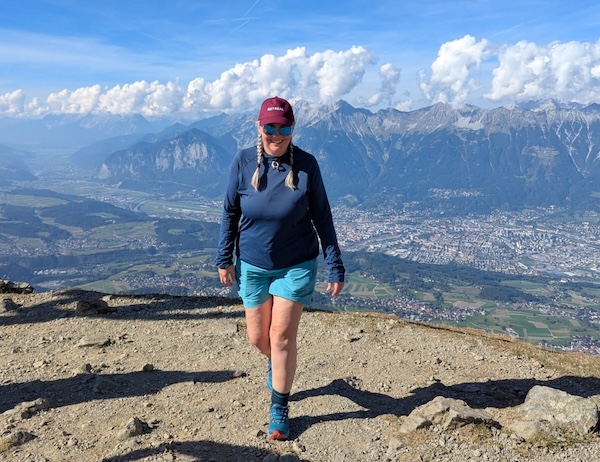
By train to the Austrian Tyrol
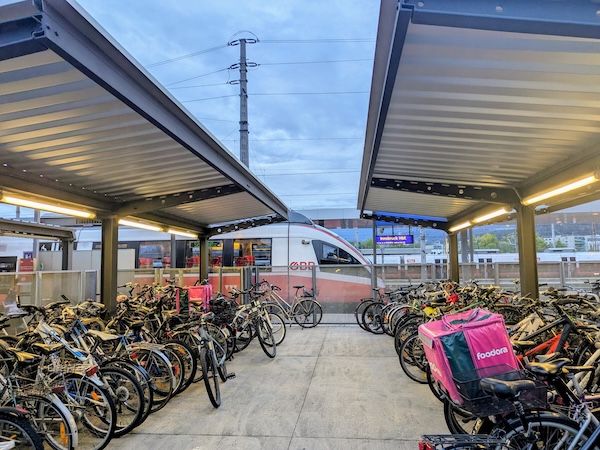
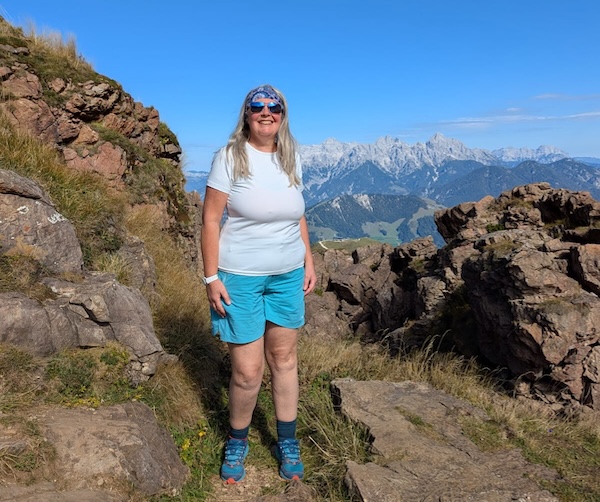
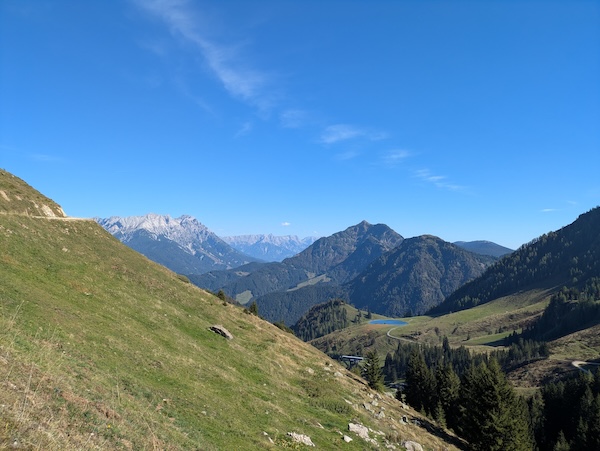
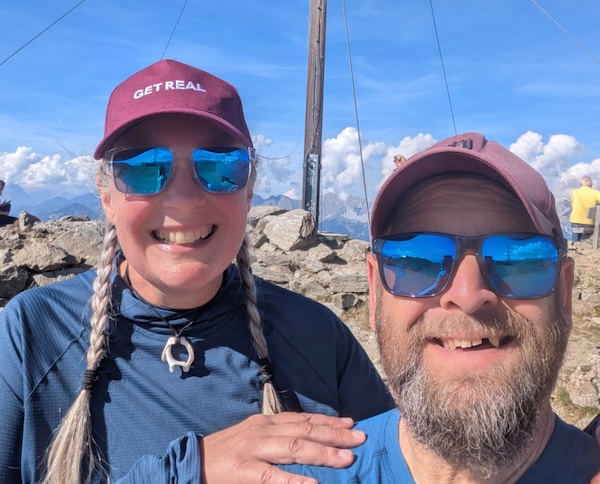
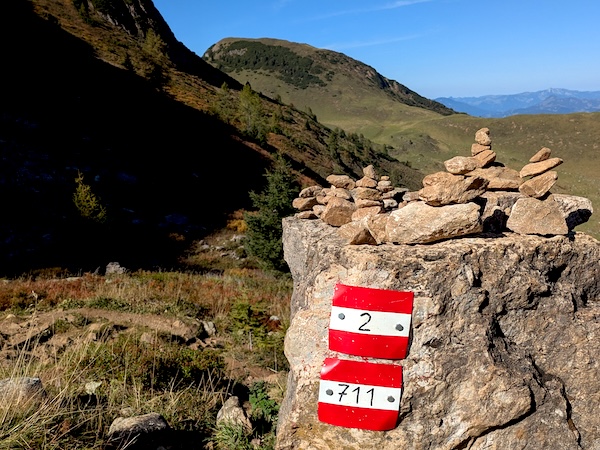
Travelling overland and flight free, we used Interrail and Eurostar on this Europe by train trip. In 2014 we fell in love with Austria when we drove there in our Toyota Hilux (sleeping in the back of the truck before car camping was trending). We love visiting Austrian ski towns out of season and have found some great deals on public transport and sometimes mountain cable cars and lifts.
Quick questions
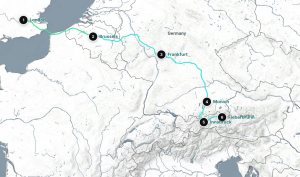
Stations? St Pancras, Brussels Midi, Frankfurt, Munich, Innsbruck, Fieberbrunn
Activities? Hiking, cable cars, city breaks, local food, Belgian beer, Austrian cake
Travel time? 27 hours (with one overnight stop)
Train experience? Super smooth, no issues
Toilets? Plenty available on the trains, pay-to-use at bigger European stations (cards and coins)
Refreshments? Restaurant cars on most trains. Plenty of options at bigger stations
Holiday details? Our main stay was in the ski resort of Fieberbrunn, we visited in early October as the summer season was coming to an end
Need to know journey basics
Europe train route
Useful links
Apps for this train trip from London to Austria.
Planning a train journey through Europe can seem daunting the first time you do it. The good news is you can do most things via your mobile phone and a few key apps (see above) but I print as many tickets as possible so I have a back-up.
Interrail might not always be the cheapest way to travel through Europe but its planning app is easy to use and can make hopping from country to country seem simple.
IMPORTANT NOTE: Interrail’s timetables aren’t updated daily; we used the DB Navigator app between Brussels and Innsbruck and the Austrian equivalent OBB in Austria to check before we travelled.
Why not fly to Austria?
A flight from London to Innsbruck would have taken us less than two hours compared to the 27 hours our train trip took. It would also have been considerably cheaper, and we wouldn’t have needed to pay for overnight accommodation on the way.
So why choose a flight free route to Europe?
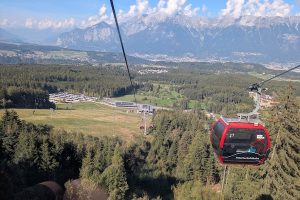
By now I imagine everyone reading this knows that the first (and most important) answer to this question is that by choosing the train instead of flying, we cut our carbon footprint by around 90%.
I’d like to add here that we’re not a totally flight-free family but if there’s a reasonable option to avoid flying, we do try to take it.
And with London trains directly to Europe, who wouldn't?
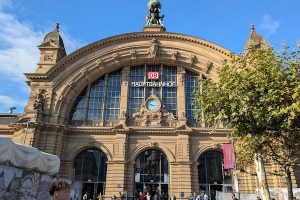
There are however plenty of other reasons we’ve come to love travelling across Europe by train (check out our Pyrenees trip). I’ve listed a few below:
- We get to see so many different places
- And meet all kinds of people (and dogs!)
- Our holidays really do feel like adventures
- Trains are a great opportunity to practice language skills
- We get to see the grunge as well as the tourist areas
- Overlanding feels more like a journey than flying does
London to the Austrian Tyrol in detail
Interrail Global Passes
Because we knew how many travel days we needed, I bought two Interrail Global Flexi Passes that gave us five days of travel each within one month.
Reserving Train Seats
In theory you can travel completely free in Europe once you’ve activated your Interrail Pass but for most sensible city to city journeys, you need to pay to reserve seats. The Interrail planning app tells you when you need to do this and takes you through the payment process.
Most seat reservations via Interrail aren’t expensive but Eurostar tickets cost a bit more (although nowhere near as much as they would without an Interrail Pass).
Our UK trains (we also travelled from Worcester to London) were free but I did use the GWR website (not the app) to reserve seats (no charge). With a Global Pass, you’re allowed one outward and one return journey in your home country.
This time we didn’t have to show our reservation tickets on any of our trains but we did on our last Europe trip. Because some train authorities require a print out of reservation tickets, I printed all of these and had them ready to show as well as our Interrail passes.
Getting on the right trains
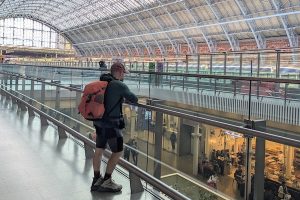
To make the trip as relaxed as possible, I wrote and printed a trip itinerary. Sharing this with Mr D meant that I didn’t have to do all of the thinking while we were travelling.
There was a high level of information on all the trains we took in Europe. All of them had announcements in English and information screens on board. On some trains the boards even gave the platforms and departure times for onward journeys.
On our outward journey I made sure we had about an hour for each train change. This gave us time to walk around, find loos and enjoy some local food. Most importantly, it made sure I didn’t spend the whole of every journey worrying about being late. We didn’t have quite as much time at each station on the return journey but by then we felt like seasoned travellers.
All the train staff were friendly, and I even managed to ask in German about one of our journey legs.
Staying overnight to break the journey

With an early start in London, it would be possible to get to Innsbruck by train in one day and there are sleeper options, but we were keen to experience the places we were travelling through so we put in overnight stays in Brussels for one night on the way out and two nights on the way back.
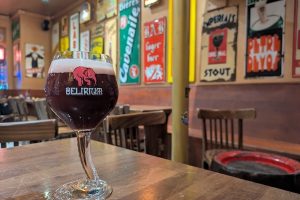
Although the beer was good, we didn’t bond that well with Brussels so would probably consider a direct sleeper to Innsbruck next time or a stay in one of the nearby towns along the line.
Staying in Innsbruck
Our main destination was the ski town of Fieberbrunn in the Pillerseetal valley but we also wanted to enjoy Innsbruck so choose three nights in an apartment just outside the city.
This worked brilliantly, we had free bus rides into town with our visitor passes and felt immediately relaxed in the small village of Patsch. By the time we moved on, we felt like we had settled into Austrian life (and had already eaten our first schnitzel!)
We also had one Innsbruck night in a city apartment hotel on the way home. This wasn’t such a good experience but only because our room wasn’t great. Innsbruck is one of those cities that feels like a town and we were really at home there.
What would I do differently?
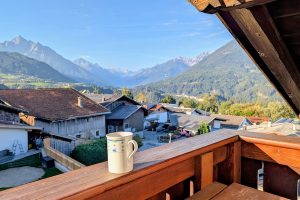
This train holiday went really smoothly, we absolutely loved Austria and I’m pleased all my planning worked out. But there are a couple of things I’ll be changing when we decide on our next Europe by train trip.
- I wouldn’t choose to stay in Brussels again. I liked that we didn’t have to change stations for onward journeys after the Eurostar (as we did in Paris), and the beer was good, but I didn’t enjoy the city experience as much as I thought I would. That’s not to say I would avoid Belgium altogether, Ghent for example is fabulous so perhaps we’d pick a different town on the way to Germany for a stopover.
- I still haven’t had the opportunity to travel on a sleeper train so now we’ve seen the scenery between Belgium and Austria, I might try that next time. I left it too late to book sleeper beds on this trip (lesson learned!) Sleeper trains do add to the cost but they also save on accommodation and perhaps money.
Related News

Could these be Europe’s best mountain thermal hot springs? Thermal hot pools in the Pyrenees Need to …

Fly to Sweden, return by train. A sustainable travel experiment. Overland travel isn’t just gaining popularity for its …

Traditional boat trains have almost disappeared from our travel landscape. When I was 16 my mum put me …
