
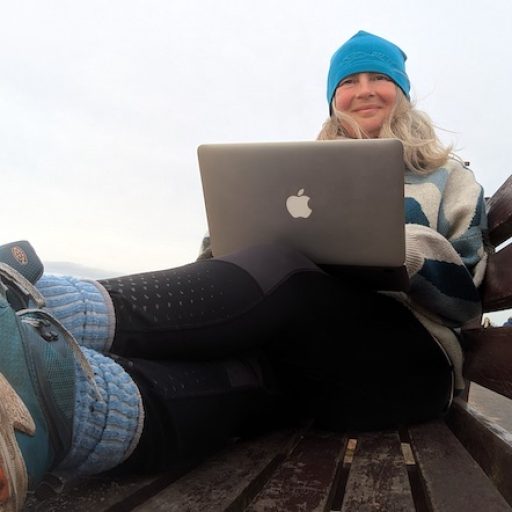
If you work from home, you’ll understand the advantages and disadvantages of freelance working and having a home office. One advantage is increased control over how your office is run. As a home worker you can choose where to put your desk, which type of paper to use and even when to turn the lights off. This is great news for those of us who are trying to find ways to reduce our carbon footprints. By not commuting you are already doing a lot for the environment but how can you go further? We have a few home office sustainability ideas to help you find your way.
Start by calculating your carbon footprint
There are plenty of carbon footprint calculators out there but the level of information some of them require can seem quite daunting. As business and domestic time tend to merge when you are working from home, you might prefer to use a personal carbon footprint calculator. It won’t separate out your business environmental costs but it will help you think about the impact of your choices like heating, travel and even snacks.
For speed, I chose this super simple carbon footprint calculator from the World Wildlife Fund. It asked easy questions and gave the results in a visual format alongside tips on how to reduce my carbon usage in the categories of ‘home’, ‘food’, ‘travel’ and ‘stuff’. As a sustainability writer and a careful consumer, I was surprised to find myself over target but the information helped me see why (in my case it was the one flight I took last year). The home section was particularly useful when it came to considering the environmental impact of my home office and I’m looking into switching energy providers to a renewable energy company.
Keep a check on your cloud storage
Most of us rely on cloud computing these days but the word ‘cloud’ is a cleverly calculated misnomer. All of the images, videos and social media content that you store in ‘the cloud’ is actually kept on servers that require huge amounts of energy and water to run. I haven’t found a way of keeping out of the cloud; short of opting for open source software, I can’t see how to. But I always sort my media, deleting as much as I can before I store it in the cloud and I schedule regular organisation session in my online media libraries. I’ll be honest, this is a somewhat tedious process but the work has proved worthwhile as I now have a neatly organised personal media library and never have to rely on stock or (even worse) AI generated images.
Avoid using AI
Before we get into this one, let me tell you I’m not a technophobe. I love technology, used to teach computing and can see the benefits (at times and for some people) of AI generated text (and perhaps other media). In some ways I’m sad to be missing out on the fun side of artificial intelligence. But for me, the present and future environmental costs of AI are too high. It requires far more energy and water cooling than normal data storage, and we are already seeing the impact of AI data centres on global communities.
Try a green search engine
This one comes with a caveat because breaking away from Google when you run your own business is like leaving your teeth at the dentist then trying to eat toffee. But green search engines, that produce their own energy and give back to environmental projects do exist. I’m currently trying to make myself use Ecosia but I often forget. Search engines are another place you might find yourself inadvertently using AI. Apparently it is possible to turn off AI search in Google (do let me know if you’ve found it) but there are also search engines available that don’t use AI at all.
Make the most of your heating
Two of the big concerns I’ve had since I’ve been working from home, have been the financial and environmental impacts of having to heat our home more. I don’t like being cold but sitting typing isn’t the most warming of activities. Over time I’ve developed a series of ‘don’t turn the central heating on’ strategies and rarely do so before midday but ultimately I’d like to move to a smaller and more energy efficient house. In the meantime I wear two pairs of trousers, sheepskin boots and plenty of wool during the winter, and sometimes sit with a hot water bottle on my knee. I also try to make sure I get up and move around regularly. It’s amazing how much warmer I feel after a quick hoovering session or walking the dog.
Choose your home office space carefully
Our house is on three floors and I used to favour the quieter downstairs room for my home office. But it didn’t take me long to realise that this was the coldest room in the house. Upstairs there was a small south-facing spare bedroom so I moved up there. When the sun does shine this space warms up quickly and even on rainy days, it doesn’t take as much energy to heat because it’s so small.
Make break time count
Stopping for breaks is super important in any job but it’s sometimes easier to forget to do so when you’re working from home. If you want to make your break time count when it comes to the environment, you could opt for organic coffee, eat home baked or locally produced cakes, do some yoga to help you warm up and use the time to research sustainable travel adventures by train.
Or you could just have 30 minutes off!
Use that flexible time wisely
Freelance isn’t a easy ride. We all know working for yourself can feel more hectic than working for a boss but the one thing freelancing does give you is more control over how you distribute your time. Imagine if we all made the decision to use this flexible time for eco-friendly activities like beach cleaning, growing our own food, volunteering in the community or writing blog posts about sustainable living.
What a happy place the world would be.
Related News

Why does my website need a blog? If your beautifully designed and eye-catching website isn’t presenting itself on the first …

All outdoor writers, even copywriters lucky enough to live in Devon, have moments when the words refuse to …

Put simply, influencer marketing is marketing that is based on relationships already built up between influencers (e.g. social …

You must be logged in to post a comment.